
Built by Abhijeet Rege Ex-CMO TD Bank Canada · 20 yrs Amex & TD · IIM Lucknow
85% of your career depends on skills
no degree teaches.

 ★★★★★
★★★★★
1L+
5L+
35+
31
Centers PAN India
Future-ready skills your degree doesn’t cover

Create with AI
Essential to upgrade for all careers
- 8 weeks (2 days a week)
- Pre-University and University Students
- Offline (Mumbai)

Critical Thinking
Powerful thinking models for work
- 8 weeks (2 days a week)
- Pre-University and University Students
- Offline (Mumbai)
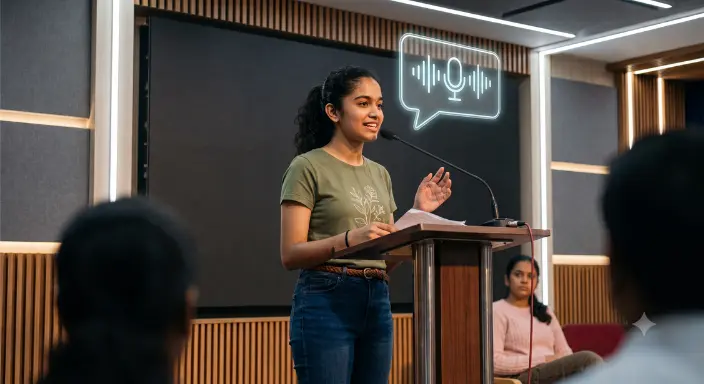
Effective Communication
Listen, speak and connect
- 8 weeks (2 days a week)
- Pre-University and University Students
- Offline (Mumbai)

Investment for Wealth
Smart Wealth Building
- 8 weeks (2 days a week)
- Pre-University and University Students
- Offline (Mumbai)
For working professionals
Built for the room you’re in now.
Bring a real problem from your own work. Leave with the method, the plan, and the buy-in to run it.

Strategic Thinking
Bring a real problem. Take a plan and a method.
- 8 weeks (2 days a week)
- Managers, asst. managers
- Offline (Mumbai)

Executive Communication
Land your message in the room that decides.
- 8 weeks (2 days a week)
- People managers, team leads
- Offline (Mumbai)

Leading High Performing Teams
Build Winning Teams.
- 8 weeks (2 days a week)
- People managers, team leads
- Offline (Mumbai)

Influencing Without Authority
Get buy-in with no title.
- 8 weeks (2 days a week)
- Cross-functional leads
- Offline (Mumbai)

AI for Leaders
Run AI like you run a team
- 6 weeks (2 days a week)
- Managers, founders
- Offline (Mumbai)
Strategic Thinking
Bring a real problem. Take a plan and a method.
- 8 weeks (2 days a week)
- Managers, asst. managers
- Offline (Mumbai)
Executive Communication
Land your message in the room that decides.
- 8 weeks (2 days a week)
- People managers, team leads
- Offline (Mumbai)
Leading High Performing Teams
Build Winning Teams.
- 8 weeks (2 days a week)
- People managers, team leads
- Offline (Mumbai)
Influencing Without Authority
Get buy-in with no title.
- 8 weeks (2 days a week)
- Cross-functional leads
- Offline (Mumbai)
AI for Leaders
Run AI like you run a team
- 6 weeks (2 days a week)
- Managers, founders
- Offline (Mumbai)
Are you
future ready?
Get your career confidence score
Future Ready
Are you
future ready?
NITO offers training on skills to Future-Proof your Career. Strategic Thinking. Communication. Leadership. Influencing. AI for Leaders.
Get your career confidence score
Unscripted. Unfiltered.
Undeniable.
“I used to get out of thoughts whenever I made eye contact, while speaking and I was able to overcome this “
Varada Ghadge
(Effective Communication)
“AI gives me an advantage because it helps me do my work faster and makes things easier for me. I can use it to get ideas, understand difficult topics and learn new things.”
Krisha Zaveri
(Create with AI)
“Feel more comfortable talking to strangers, wherein the past I was even afraid to ask for directions. This course made me realise my potential”
Rajavi Palkar
(Effective Communication)
“Before the Create with AI course, I only used ChatGPT for basic homework help. Now, I’ve built my own product brand and gained a serious edge over the competition.”
Rayan Chakraborty
(Create with AI)
“I used to be scared about public speaking. I’m more confident now and I know tricks and methods for speaking Impromptu.”
Lavanya Kulkarni
(Effective Communication)
“I’ve become more confident in expressing my thoughts and exploring new ideas. It helped me discover my potential, step out of my comfort zone, and look at things with a more open mind.”
Urvi
(Create with AI)
“Before I was not that confident to talk with strangers and could not speak with clarity. During this course I have improved a lot as a person and I have gotten quite confident too.”
Prisha Lakhani
(Effective Communication)
“I was timid and shy before attending this course, but it really helped me overcome that and now I am confident”
Parth Phatak
(Effective Communication)
“My journey from unstructured speaking which felt like rambling, to structured speaking in this class was really fun and inquisitive.”
Aabha Kulkarni
(Critical Thinking)
Unscripted. Unfiltered.
Undeniable.
Varada Ghadge
Rajavi Palkar
Lavanya Kulkarni
Prisha Lakhani
Parth Phatak
Aabha Kulkarni
The future of work is changing.

New Careers
Over 1.7 Crore New Jobs will emerge in fields of technology, environment, education and digital transformation by 2030

Al & Automation Impact
Rapid change to industries, operations, business models, and the nature of work
New Skills
The future of work is changing.

New Careers
Over 1.7 Crore New Jobs will emerge in fields of technology, environment, education and digital transformation by 2030

Al & Automation Impact
Rapid change to industries, operations, business models, and the nature of work

New Skills
“After two decades in senior leadership, I realised the skills that move careers are the ones no degree teaches.”
The same pattern repeated. Technically strong, hardworking people whose careers plateaued — not from any lack of intelligence, but from a lack of human and cognitive skills. Nobody had ever taught them, and nobody had told them it mattered.
I built those skills deliberately over a decade and watched what they did for my own career and for my teams. Then I moved back to India to teach them properly.
NITO is not built from academic theory. It is built from lived leadership experience at the highest levels — and structured into a rigorous, learnable curriculum.
The same pattern repeated. Technically strong, hardworking people whose careers plateaued — not from any lack of intelligence, but from a lack of human and cognitive skills. Nobody had ever taught them, and nobody had told them it mattered.
I built those skills deliberately over a decade and watched what they did for my own career and for my teams. Then I moved back to India to teach them properly.
NITO is not built from academic theory. It is built from lived leadership experience at the highest levels — and structured into a rigorous, learnable curriculum.
Transformation,
not information.
01
Live,
always
A real trainer, in real time, watching you. Never a pre-recorded module you half-finish in week two.
02
Small
batches
03
Structured
curriculum
04
Built by
practitioners
Transformation,
not information.
Live, always
Small batches
Structured curriculum
Built by practitioners
Your degree covers 15% of what your career actually needs.
What university grades you on
Necessary. Assessed. Certified. And only a sixth of the picture.
What your career grades you on
People Skills
Thinking Skills
Leadership & Mindset
Your degree covers 15% of what your career actually needs.
What university grades you on
Necessary. Assessed. Certified. And only a sixth of the picture.
What your career grades you on
People Skills
Thinking Skills
Leadership & Mindset
Imagine a Future Where You’re Always in Demand
Navigate Career Changes
Be confident that your skills are always relevant
Secure Fulfilling Roles
Leverage your unique talents and make impact
Thriving Career Path
Get continuous growth and opportunity
Freedom from Anxiety
Reduce job insecurity, be ready for whatever comes next
This isn’t just about avoiding job loss; it’s about achieving genuine career confidence and lasting security.
Imagine a Future Where You’re Always in Demand
Navigate Career Changes
Be confident that your skills are always relevant
Secure Fulfilling Roles
Leverage your unique talents and make impact
Thriving Career Path
Get continuous growth and opportunity
Freedom from Anxiety
Reduce job insecurity, be ready for whatever comes next
This isn’t just about avoiding job loss; it’s about achieving genuine career confidence and lasting security.
A Startup. Within a 35 year-old education institution.
1L+
Students Trained
4.9/5
Google Rating
35+
Years in Education
Centres Pan India
The NITO story
A Startup. Within a 35 year-old education institution.
NITO is part of an education group with three and a half decades in Design, Media and Technology education, 31 centres across India and over a lakh students trained. The curriculum is new. The institution isn’t.
1L+
Students Trained
4.9/5
Google Rating
35+
Years in Education
Centres Pan India
FAQs
Before you enquire
What exactly does NITO teach?
How is this different from a YouTube video or an online course?
Who is this for?
Who teaches the programs?
What does it cost?
Online or in person?
Will I get a certificate?
The Argument
What is NITO?
We’re part of a 35-year-old education group with 32 centres across India that has trained over a lakh students. NITO is the newest thing it has built, aimed at the skills the last thirty-five years of education never covered.
Why do these skills matter more than my degree?
Research widely cited from Harvard, Stanford and the Carnegie Foundation puts roughly 85% of long-term career success down to human and cognitive skills — how you think, communicate, influence and adapt — and about 15% down to technical knowledge. Academic curricula spend almost all their time on that 15%, through degrees such as engineering, law, medicine and commerce.
So two people graduate with the same degree and the same marks, and five years later their careers look nothing alike. The difference is almost never intelligence. It’s the 85% nobody taught either of them.
Is there actual research behind this, or is it marketing?
There are three findings we build on, and we’d rather you check them than take our word.
The World Economic Forum’s Future of Jobs work estimates that around a quarter of all jobs, and close to half of all skills, will be disrupted within five years — with analytical thinking, resilience, leadership and AI literacy rising fastest in employer demand.
The 85/15 split between human and technical contribution to career success comes from long-cited research associated with Harvard, Stanford and the Carnegie Foundation.
And communication shows up repeatedly as a leading cause of hiring rejection — not lack of qualifications.
None of this is new. What’s surprising is how little the education system has changed in response to it.
Won't AI make these skills irrelevant too?
The opposite, and it’s the reason NITO exists now rather than a decade ago.
AI is very good at the technical, repeatable work — the part your degree trained you for. It is not good at deciding which problem is worth solving, persuading a room, holding a team together through uncertainty, or judging what to do when the answer isn’t clear.
There’s a second effect people miss. The individuals getting real value from AI are the ones who can think in structure, ask a precise question, and recognise when a confident-sounding answer is wrong. Those are exactly these skills. AI doesn’t replace them — it complements and compounds on them. The gap between people who have them and people who don’t just widened considerably.
Can this be taught
Can these skills actually be learned, or are some people just born with it?
Talent decides where you start. It doesn’t decide where you finish.
Our founder was a Director at American Express when a presentation of his fell apart in front of senior leaders. He spent the next five years rebuilding how he communicates, one dimension at a time, and three more on strategic thinking. He finished his career as Chief Marketing Officer of TD Bank Canada. That wasn’t talent arriving late — it was deliberate work.
What all of these skills have in common is that none of them improve by reading. Thinking clearly, leading a team, making a case, working well with AI — each gets better the same way: you do it, someone tells you precisely what to change, and you do it again. Which makes them learnable by anyone. They’re just almost never taught.
Isn't this just soft skills training?
The more useful difference is format. Most soft skills training is a one-day workshop delivered to a large group, ending with a certificate nobody reads. NITO programmes run over weeks, in batches capped at 20, where you speak, get corrected, and go again in every single session.
Same subject on paper. Completely different thing in practice.
How do you actually teach something like this?
Every session is live, with a trainer watching you. Batches stay small so every participant gets a step change, not just the confident ones. You spend most of the time doing the thing rather than hearing about it, and you’re corrected in the moment rather than in a report afterwards.
Two methods do most of the work.
Iterative coaching. We take one thing at a time and stay on it. Not a tour of twenty techniques, but a single dimension — how you structure an answer, how you hold a room, how you handle the question you didn’t see coming — worked again and again until there’s a visible step change. Most training covers a great deal and changes very little. We’d rather change one thing properly and have you feel the difference.
Participative coaching. The trainer isn’t the only one giving feedback. The room does. You’ll hear how your point actually landed from five people who were listening, not just from the person at the front — which is more honest, and much closer to how it works at your job. It also means you learn as much watching someone else be coached as you do being coached yourself.
The closest analogy is an athletics coach. They don’t tell you it was fine. They tell you precisely what to change, you go again, and they tell you again — because everyone in that room is there to get better, and nobody mistakes a correction for an attack.
Which is also why nobody is thrown in unprepared. Sessions build in a deliberate order, and by the time you’re speaking in front of the group you’ve already done the smaller version of it. Students routinely tell us it’s the first place they’ve felt safe enough to get something wrong.
What We Offer
What programmes do you run?
Our curriculum covers five skill domains — People, Thinking, Business & Leadership, Mindset, and Technology & AI Fluency — organised into two tiers.
NITO Campus, for university students and early-career professionals: Effective Communication, AI Fluency, and Critical Thinking & Problem Solving.
NITO Pro, for working professionals: Strategic Thinking, Leading High-Performing Teams, Influencing Without Authority, Executive Communication and AI for Leaders.
We’d rather run a small number of programmes properly, where we can make a real difference, than a long catalogue adequately.
Who is NITO for?
University students and early-career professionals who are technically capable but not being heard, not being picked, or not sure what AI means for their future.
And working professionals, typically between 27 and 40, who’ve hit the point where doing good work is no longer enough — where they’re expected to influence people who don’t report to them, lead a team, or make decisions before the picture is clear.
If you’re already excellent at all of that, you don’t need us.
Who teaches, and why should I trust them?
Practitioners rather than lecturers.
Our founder Abhijeet Rege is an IIM Lucknow alumnus who spent twenty years in senior leadership at American Express and TD Bank across the US and Canada, finishing as Chief Marketing Officer of TD Bank Canada.
CA Parul Gupta has trained more than 10,000 students across a decade, sat on the core committee that designed ICAI’s soft skills curriculum delivered pan-India, and trained senior Railway officers and Delhi Police under Mission Karmayogi.
Zarah Dhoria brings 23 years in training, facilitation and behavioural coaching across corporate and academic environments.
Dr Pallavi Narayan holds a PhD from IIT Delhi and has designed communication courses at O.P. Jindal Global University, Ahmedabad University and IIT Delhi, with teaching experience at NUS and NTU Singapore.
Where does the curriculum come from?
Strategic Thinking came out of six years of weekend notes taken while working alongside a mentor at American Express. Effective Communication came out of five years of deliberately rebuilding one person’s own communication after it failed publicly. The conflict module came from a nine-hour flight spent talking to a psychologist about how disagreements actually get resolved.
We don’t teach anything nobody here has done.
Trust and Practicalities
NITO is new. Why should I trust it?
The curriculum is new. The institution behind it isn’t.
NITO is part of an education group that has been teaching for 35 years — Edit Institute, the first in India to teach graphics, animation and multimedia, founded in 1990, and SILICA, India’s leading design entrance institute since 2003. Between them, 32 centres across India, over a lakh students trained, and five to six thousand more every year.
This is the third time this group has built training for a skill India needed before the market noticed it needed it.
Our own programmes are rated 4.9 out of 5 by more than 330 students on Google. Read those before deciding anything.
What won't NITO do?
In a category full of overpromising, what an institute refuses to do tells you more than what it claims.
We don’t sell recordings. Every session is live, with a trainer watching you.
We don’t promise placements. We build skills that make you employable. Anyone guaranteeing a job is selling something else.
We don’t run large batches. If you don’t speak and get feedback in every session, it isn’t training.
We don’t teach what we haven’t practised. Every module comes from someone who has actually done the thing.
What does it cost, and how do I start?
The honest first step isn’t enrolling — it’s talking to a career guide. Ours aren’t telecallers working from a script; they come from a group that has spent 35 years advising over five lakh students on career decisions. More than 10,000 of those conversations have been about NITO programmes specifically: which one fits, or whether none of them do.
Tell them where you are and what’s actually frustrating you. They’ll answer honestly — including that you’d be better off waiting, or that you don’t need us at all. A student in the wrong programme is worse for us than no student.
FAQs
Before you enquire
What exactly does NITO teach?
How is this different from a YouTube video or an online course?
Who is this for?
Who teaches the programs?
What does it cost?
Online or in person?
Will I get a certificate?
The Argument
What is NITO?
We’re part of a 35-year-old education group with 32 centres across India that has trained over a lakh students. NITO is the newest thing it has built, aimed at the skills the last thirty-five years of education never covered.
Why do these skills matter more than my degree?
Research widely cited from Harvard, Stanford and the Carnegie Foundation puts roughly 85% of long-term career success down to human and cognitive skills — how you think, communicate, influence and adapt — and about 15% down to technical knowledge. Academic curricula spend almost all their time on that 15%, through degrees such as engineering, law, medicine and commerce.
So two people graduate with the same degree and the same marks, and five years later their careers look nothing alike. The difference is almost never intelligence. It’s the 85% nobody taught either of them.
Is there actual research behind this, or is it marketing?
There are three findings we build on, and we’d rather you check them than take our word.
The World Economic Forum’s Future of Jobs work estimates that around a quarter of all jobs, and close to half of all skills, will be disrupted within five years — with analytical thinking, resilience, leadership and AI literacy rising fastest in employer demand.
The 85/15 split between human and technical contribution to career success comes from long-cited research associated with Harvard, Stanford and the Carnegie Foundation.
And communication shows up repeatedly as a leading cause of hiring rejection — not lack of qualifications.
None of this is new. What’s surprising is how little the education system has changed in response to it.
Won't AI make these skills irrelevant too?
The opposite, and it’s the reason NITO exists now rather than a decade ago.
AI is very good at the technical, repeatable work — the part your degree trained you for. It is not good at deciding which problem is worth solving, persuading a room, holding a team together through uncertainty, or judging what to do when the answer isn’t clear.
There’s a second effect people miss. The individuals getting real value from AI are the ones who can think in structure, ask a precise question, and recognise when a confident-sounding answer is wrong. Those are exactly these skills. AI doesn’t replace them — it complements and compounds on them. The gap between people who have them and people who don’t just widened considerably.
Can this be taught
Can these skills actually be learned, or are some people just born with it?
Talent decides where you start. It doesn’t decide where you finish.
Our founder was a Director at American Express when a presentation of his fell apart in front of senior leaders. He spent the next five years rebuilding how he communicates, one dimension at a time, and three more on strategic thinking. He finished his career as Chief Marketing Officer of TD Bank Canada. That wasn’t talent arriving late — it was deliberate work.
What all of these skills have in common is that none of them improve by reading. Thinking clearly, leading a team, making a case, working well with AI — each gets better the same way: you do it, someone tells you precisely what to change, and you do it again. Which makes them learnable by anyone. They’re just almost never taught.
Isn't this just soft skills training?
The more useful difference is format. Most soft skills training is a one-day workshop delivered to a large group, ending with a certificate nobody reads. NITO programmes run over weeks, in batches capped at 20, where you speak, get corrected, and go again in every single session.
Same subject on paper. Completely different thing in practice.
How do you actually teach something like this?
Every session is live, with a trainer watching you. Batches stay small so every participant gets a step change, not just the confident ones. You spend most of the time doing the thing rather than hearing about it, and you’re corrected in the moment rather than in a report afterwards.
Two methods do most of the work.
Iterative coaching. We take one thing at a time and stay on it. Not a tour of twenty techniques, but a single dimension — how you structure an answer, how you hold a room, how you handle the question you didn’t see coming — worked again and again until there’s a visible step change. Most training covers a great deal and changes very little. We’d rather change one thing properly and have you feel the difference.
Participative coaching. The trainer isn’t the only one giving feedback. The room does. You’ll hear how your point actually landed from five people who were listening, not just from the person at the front — which is more honest, and much closer to how it works at your job. It also means you learn as much watching someone else be coached as you do being coached yourself.
The closest analogy is an athletics coach. They don’t tell you it was fine. They tell you precisely what to change, you go again, and they tell you again — because everyone in that room is there to get better, and nobody mistakes a correction for an attack.
Which is also why nobody is thrown in unprepared. Sessions build in a deliberate order, and by the time you’re speaking in front of the group you’ve already done the smaller version of it. Students routinely tell us it’s the first place they’ve felt safe enough to get something wrong.
What We Offer
What programmes do you run?
Our curriculum covers five skill domains — People, Thinking, Business & Leadership, Mindset, and Technology & AI Fluency — organised into two tiers.
NITO Campus, for university students and early-career professionals: Effective Communication, AI Fluency, and Critical Thinking & Problem Solving.
NITO Pro, for working professionals: Strategic Thinking, Leading High-Performing Teams, Influencing Without Authority, Executive Communication and AI for Leaders.
We’d rather run a small number of programmes properly, where we can make a real difference, than a long catalogue adequately.
Who is NITO for?
University students and early-career professionals who are technically capable but not being heard, not being picked, or not sure what AI means for their future.
And working professionals, typically between 27 and 40, who’ve hit the point where doing good work is no longer enough — where they’re expected to influence people who don’t report to them, lead a team, or make decisions before the picture is clear.
If you’re already excellent at all of that, you don’t need us.
Who teaches, and why should I trust them?
Practitioners rather than lecturers.
Our founder Abhijeet Rege is an IIM Lucknow alumnus who spent twenty years in senior leadership at American Express and TD Bank across the US and Canada, finishing as Chief Marketing Officer of TD Bank Canada.
CA Parul Gupta has trained more than 10,000 students across a decade, sat on the core committee that designed ICAI’s soft skills curriculum delivered pan-India, and trained senior Railway officers and Delhi Police under Mission Karmayogi.
Zarah Dhoria brings 23 years in training, facilitation and behavioural coaching across corporate and academic environments.
Dr Pallavi Narayan holds a PhD from IIT Delhi and has designed communication courses at O.P. Jindal Global University, Ahmedabad University and IIT Delhi, with teaching experience at NUS and NTU Singapore.
Where does the curriculum come from?
Strategic Thinking came out of six years of weekend notes taken while working alongside a mentor at American Express. Effective Communication came out of five years of deliberately rebuilding one person’s own communication after it failed publicly. The conflict module came from a nine-hour flight spent talking to a psychologist about how disagreements actually get resolved.
We don’t teach anything nobody here has done.
Trust and Practicalities
NITO is new. Why should I trust it?
The curriculum is new. The institution behind it isn’t.
NITO is part of an education group that has been teaching for 35 years — Edit Institute, the first in India to teach graphics, animation and multimedia, founded in 1990, and SILICA, India’s leading design entrance institute since 2003. Between them, 32 centres across India, over a lakh students trained, and five to six thousand more every year.
This is the third time this group has built training for a skill India needed before the market noticed it needed it.
Our own programmes are rated 4.9 out of 5 by more than 330 students on Google. Read those before deciding anything.
What won't NITO do?
In a category full of overpromising, what an institute refuses to do tells you more than what it claims.
We don’t sell recordings. Every session is live, with a trainer watching you.
We don’t promise placements. We build skills that make you employable. Anyone guaranteeing a job is selling something else.
We don’t run large batches. If you don’t speak and get feedback in every session, it isn’t training.
We don’t teach what we haven’t practised. Every module comes from someone who has actually done the thing.
What does it cost, and how do I start?
The honest first step isn’t enrolling — it’s talking to a career guide. Ours aren’t telecallers working from a script; they come from a group that has spent 35 years advising over five lakh students on career decisions. More than 10,000 of those conversations have been about NITO programmes specifically: which one fits, or whether none of them do.
Tell them where you are and what’s actually frustrating you. They’ll answer honestly — including that you’d be better off waiting, or that you don’t need us at all. A student in the wrong programme is worse for us than no student.





































Talk to a career guide
before you decide.
Usually a response within a few working hours
Full fee structure and batch dates shared upfront
We'll tell you if it isn't the right fit
Let’s connect
Fill this in and a counsellor will reach out.
Next step
Talk to a career guide
before you decide.
No pressure, no obligation. Tell us where you are in your studies or career and we’ll tell you honestly which program fits — or whether NITO is right for you at all.
Usually a response within a few working hours
Full fee structure and batch dates shared upfront
We'll tell you if it isn't the right fit
Let’s connect
Fill this in and a counsellor will reach out.